
Blind Riveting vs Solid Riveting: Key Differences and Applications
The winning mechanical bond makes modern assembly successful. The comparison of blind riveting vs solid riveting not only looks at their attachment capabilities but also their production speed and joint life.
Every project has its own challenges of material thickness and tool clearance. Our selection usually involves the physical limitations of the space. Our goal is to choose a fastening that will ensure maximum integrity of the structure, while making the work process easier, especially with complicated geometries and little space on the rear side.
What is Blind Riveting?
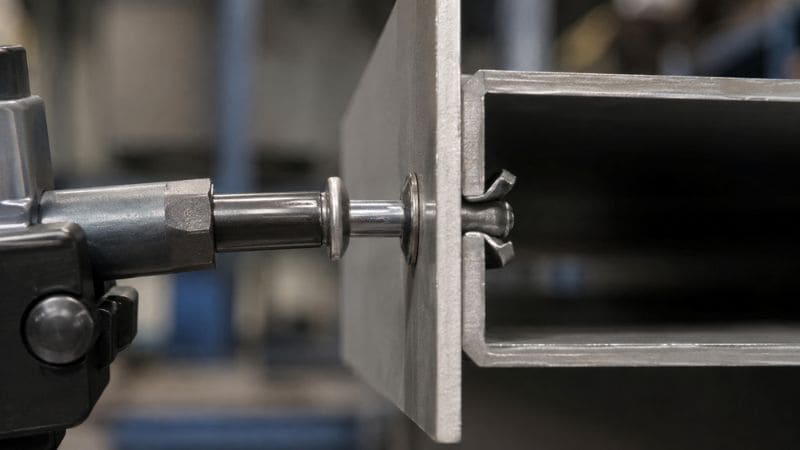
Blind riveting is a way of mechanical joining in which a fastener is installed in a workpiece from only one side. We pull an internal mandrel through the rivet body to expand the shank and produce a permanent clinch on the inaccessible side.
This method is designed for applications where there is no rear-side clearance. We depend on this expansion due to the tension to fasten components without needing the bucking bars or the two-sided access of traditional equipment.
Steps to Blind Riveting Process
Alignment
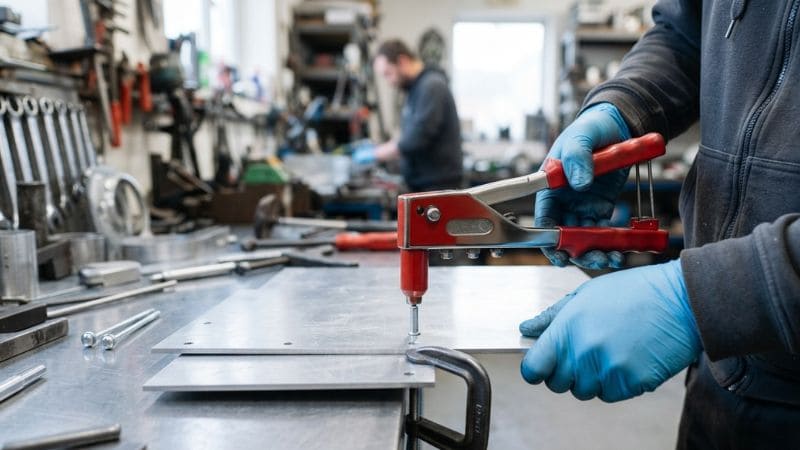
We insert the fastener through the pre-aligned holes in the workpieces such that the rivet body seats completely against the main surface.
Вовлечение инструментов
We place the installation tool on the mandrel and apply pressure to maintain the flushness of the components.
Mandrel Retraction
We can now pull the mandrel head into the rivet body to cause the shank to bloom on the blind side by activating the tool.
Clinching
As the mandrel compresses the rivet against the rear material, a mechanical clinch is made.
Separation
We will keep pulling until the mandrel reaches its required tensile limit and snaps in a controlled manner, leaving the joint intact.
Advantages of Blind Riveting
Single Side Access
We can secure joints in constrained environments, such as tubings or enclosed panels, where the rear surface is fully closed. There’s no requirement for another operator nor a complex access point here.
Rapid Installation
We are able to finish the connection within seconds of the process. Since the tool automatically manages the mandrel retraction and snapping, we have higher cycle counts than impact methods.
Универсальность
We utilize this technique for a wide range of thicknesses and materials. It works especially well for joining metals to plastics or composites, where the material deformation caused by high-force methods occurs frequently.
Minimal Tool Requirements
Our team can perform installations using portable, lightweight equipment. These tools, whether pneumatic or manual, don't need the massive compressive force and heavy infrastructure of solid fastener systems.
Limitations of Blind Riveting
Limited Load Bearing
These fastening methods usually display lower fatigue resistance than a solid alternative due to limited load bearing. In extreme vibration or shift of load, the hollow nature of the joint shank can lead to failure of the joints.
Lower Strength
The shear and tensile capacities are essentially reduced because the joint relies on the deformation of a thin-walled sleeve rather than a solid metal pillar. We usually do not use them in primary airframes and other heavy equipment where maximum clamping force is critical.
Material Constraints
We are limited in substrate choices by the rivet’s expansion mechanics. A brittle material will, due to pressure from the blind-side expansion, tend to crack or delaminate. That will certainly happen with some high-modulus composites or cast alloys.
Specific Industry Applications of Blind Riveting
Aerospace Interior Systems
These fasteners are used to secure the overhead bins, floor panels, and cockpit ducting. As the airframe skin obstructs access to the rear, we offer this interior outfitting solution.
Automotive Chassis and Frames
The use of automotive chassis and frames has been introduced in vehicle production to join aluminum body panels and heat shields to tubular frames. The boxed section components where the bucking bar cannot get to
HVAC and Enclosures
Rivets are used in the assembly of industrial heat exchangers, HVAC, and electrical enclosures. It allows us to rapidly seal external casings without interfering with the internal delicate parts or wiring.
Бытовая электроника
Within consumer electronics, where there is no room for conventional tooling, we utilize micro-sized alternatives for securing internal heat sinks and shielding plates of laptops and server racks.
What is Solid Riveting?
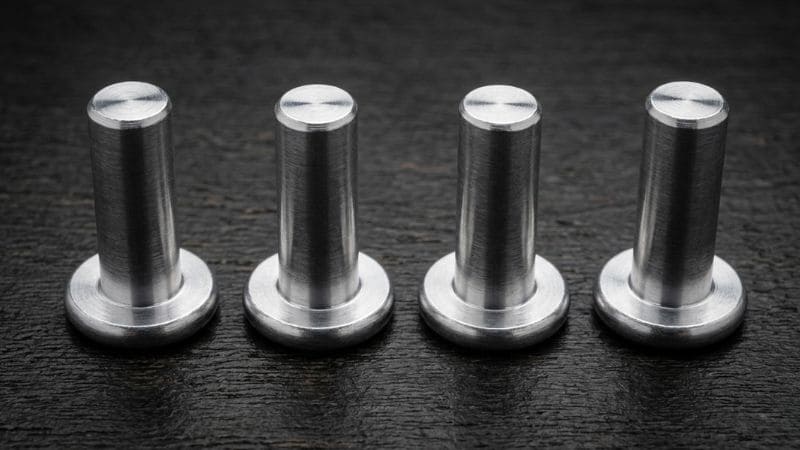
Solid riveting is the traditional fastening method in which a solid metal shaft serves as a permanent structural pillar between two components. We perform installation by passing the shank through the aligned hole of the base material with the application of a very high compression force to the tail and supporting the head with a bucking bar.
This process induces plastic deformation and results in the shank expanding and completely filling the hole and forming a second head on the other face. Through this cold-heading, hot-working, the high–interference fit is achieved, so that load transfer and joint rigidity are maximized.
Steps to Solid Riveting Process
Preparation and Alignment
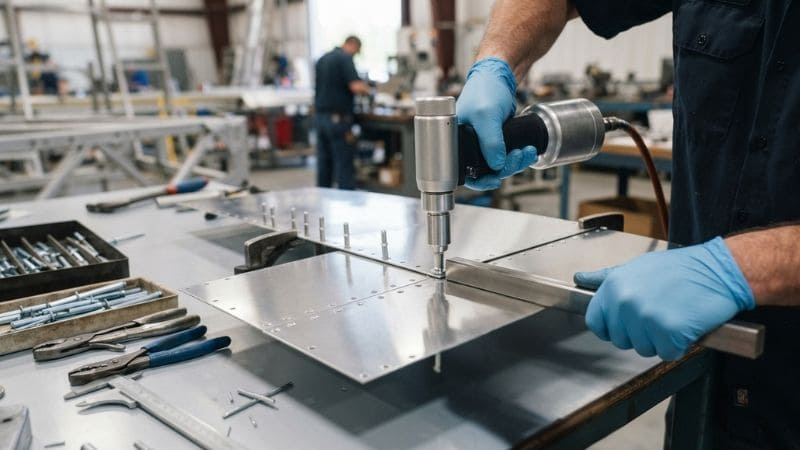
A solid shank is placed through the holes we have made earlier on the corresponding parts. Rivet length must allow material to be formed for the shop head so that the rivet can be secured in place.
Support and Bucking
A hardened steel bucking bar is then put against the factory head of the rivet. This gives the reaction force that must act on the object.
Compression
With a pneumatic riveting hammer or hydraulic squeezer, we apply a continuous high-impact force on the tail. This pressure makes the metal undergo plastic deformation.
Shank Expansion
As compression continues, the shank expands to the radial limits of the hole, filling the hole and eliminating any gap between the fastener and workpiece.
Head Formation
As the protruding tail flattens out and takes on the shape of a second head, the process is completed, and the materials come together in a permanent high-interference fit.
Advantages of Solid Riveting
Exceptional Strength
Excellent shear and tensile properties are achievable because the fastener is a solid metal component in one piece. As the shank expands fully and fills the hole, we avoid any structural play, and thus it can withstand extreme mechanical stress.
Reliability
These fasteners on mission-critical structures are reliable because they do not have moving parts or hollow cavities that break the bond. After it's built in, this permanent interference fit has a high resistance to vibration and fatigue. That’s why we continue to use them on primary airframes and bridges.
Универсальность материалов
Versatility that allows us to work with many different alloys, including titanium, high-strength aluminum, and steel, to suit the thermal and chemical characteristics of the work. By keeping the thermal expansion rate of the substrate and fastener essentially equal, loosening of the joint is prevented.
Limitations of Solid Riveting
Installation Complexity
We need specialized skills and precise coordination in order to perform these joints correctly. If the pneumatic hammer’s force and the bucking bar’s resistance are not perfectly matched, we may clinch the rivet at an angle or damage the surrounding material.
Access Requirements
To conduct our workflow, we need a dual-sided clearance. Due to the requirement of one operator holding the bucking bar while the other applies the force, this method cannot be used for enclosed structures, small-diameter piping, or any other assembly with reachability issues to the rear side.
Фактор времени
This process is much slower than the current ones available. The need for manual setup of every fastener and the requirement of two-person assembly drive the labor cost upward and delay production, which is not conducive to mass production.
Specific Industry Applications of Solid Riveting
Commercial Aircraft Airframes
Fasteners for the primary fuselage skins and wing spar assemblies are used on commercial aircraft airframes. Because these structures are subject to continuous pressurization cycles and severe vibrations, we depend on the solid shank to prevent the occurrence of fatigue cracks.
Bridge Construction and Infrastructure
We embed these in the structural steel girders of suspension bridges, truss bridges, and other similar structures. The high interference fit helps the heavy plates stay bonded under the influence of heavy vehicles and climatic changes.
Locomotive and Freight Car Manufacturing
In demand for the frames of heavy-duty railcars as well as tank cars. Due to the intense thickness of the steel, it requires a clamping force that only a compressed solid rivet can achieve.
Shipbuilding and Marine Engineering
They are used for the assembly of hull plating and internal bulkheads in large vessels. The device has a solid metal core that provides a watertight bond in conjunction with the vibration resistance.
Materials Used for Riveting
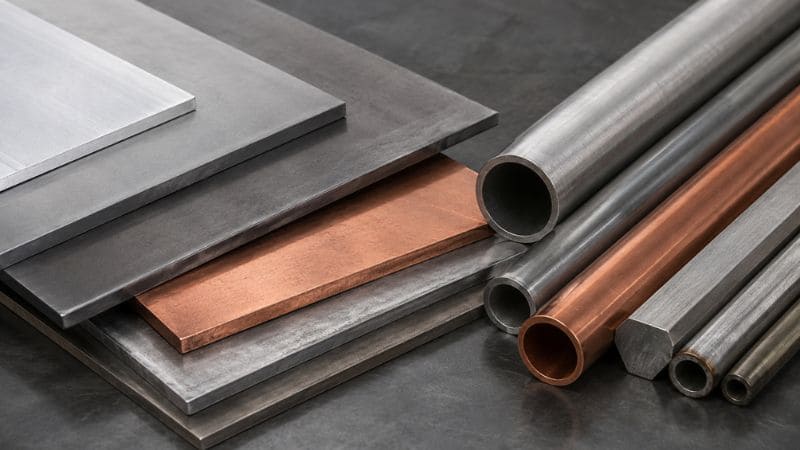
Алюминий
Алюминиевые сплавы (2117-T4) are commonly used for аэрокосмическая промышленность and automotive applications. Ideal for lightweight structures, it has a great strength-to-weight ratio and natural atmospheric corrosion resistance.
Сталь
Steel rivets specifically designed for heavy-duty structural applications, including bridge parts and machinery. These alloys are very strong but require metallization (zinc plating) to prevent oxidation.
Нержавеющая сталь
Stainless steel is used in high moisture or chemical environments. This is more durable, retains its structure at higher temperatures, and requires more force to install due to increased hardness.
Медь
Copper rivets are mainly for reasons of electrical conductivity or aesthetics. Due to its ability to form easily and its high level of corrosion resistance (especially in seawater), copper is used quite often.
Monel and Nickel Alloys
We utilize Monel (a nickel-copper alloy) for specialized aerospace or chemical processing equipment. We depend on its exceptional resistance to salt water and high temperature behavior, where a normal alloy would fail.
Blind Riveting vs Solid Riveting: Key Differences
Mechanical Differences
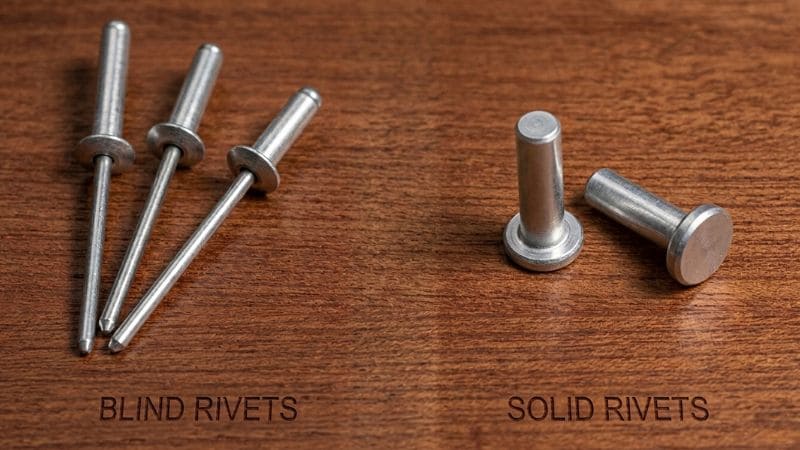
Mechanical differences rely on solid rivets for high-stressed, load-bearing joints. The solid metal shank completely fills the hole, which maximizes shear strength. Even if blind rivets are structurally sufficiently strong for many applications, they feature a hollow sleeve, resulting in inherently lower fatigue resistance and load capacity.
Installation Accessibility
This is the main distinguishing factor. Blind rivets offer the unique advantage of installation from a single side. As such, they are ideal for those applications where one side will be enclosed. An example here is piping or tubing applications. In contrast, solid riveting requires access from both sides for the driving tool and the bucking bar.
Time and Complexity
Blind riveting technique is faster and easier. In many cases, only one operator is required with little training needed. The process of solid riveting is quite complicated, requiring two people to work together in a synchronized manner to prevent damaging the material.
Совместимость материалов
We use blind rivets when joining thin substrates that are also brittle. In this case, the controlled sleeve expansion will not cause cracking. The high-impact force of solid riveting is best suited for tough, ductile metals that can withstand heavy compression.
Time Considerations
From a production perspective, blind rivets give high volume, fast-production assembly of parts. The cycle time of solid rivets is much slower because of the manual setup and due to the physical driving.
Environmental and Operational Conditions
In places where there is strong vibration, we prefer solid rivets that are permanently vibration-proof by means of an interference fit. For non-structural weather-sealing or light-duty enclosures, a blind fastener offers speed and convenience.
Tips for Choosing Between Blind Riveting vs Solid Riveting
Determine Accessibility
Where the rear side of the workpiece cannot be accessed, such as a tank that is sealed, tubing, and complex ductwork, we have to use blind riveting. When both ends are easily accessible, we will use solid riveting due to its superior strength.
Understanding Load Requirements
Recognizing the footprint of the load can help you determine the number of rivets required for a specific joint. If the application is secondary or non-load-bearing, then the convenience of a blind fastener usually carries more weight than a solid one of greater density.
Calculate Material Thickness
For thick, ductile metal plates that can sustain high-impact compression, we use solid rivets. In order to prevent surface deformation or cracking from intense hammering, we choose blind rivets for thin-gauge sheets, composites, or plastics.
Examine Labor and Volume
Because blind riveting only needs one operator and requires less technical training, it is our choice for high-speed production where labor expenses must be kept to a minimum. For specialized, low-volume applications where joint lifetime is the top objective, solid riveting works well.
Think About Tooling Portability
The lightweight and portability of blind riveting equipment is a big benefit if we are doing field repairs or working in confined, uncomfortable spaces. Heavy hydraulic or pneumatic equipment, usually fixed to a workshop floor, is needed for solid riveting.
Заключение
Considering structural needs and access limits is a must when deciding between blind riveting vs solid riveting. When we need the strongest joints possible for heavy-duty, two-sided connections, we use solid riveting. On the other hand, blind riveting is fast and can be used on both sides of complicated assemblies.
Choosing the right fastener will keep the joint strong over time and make production more efficient. Message DEK today to get the best riveting solutions and technical help for your project.
