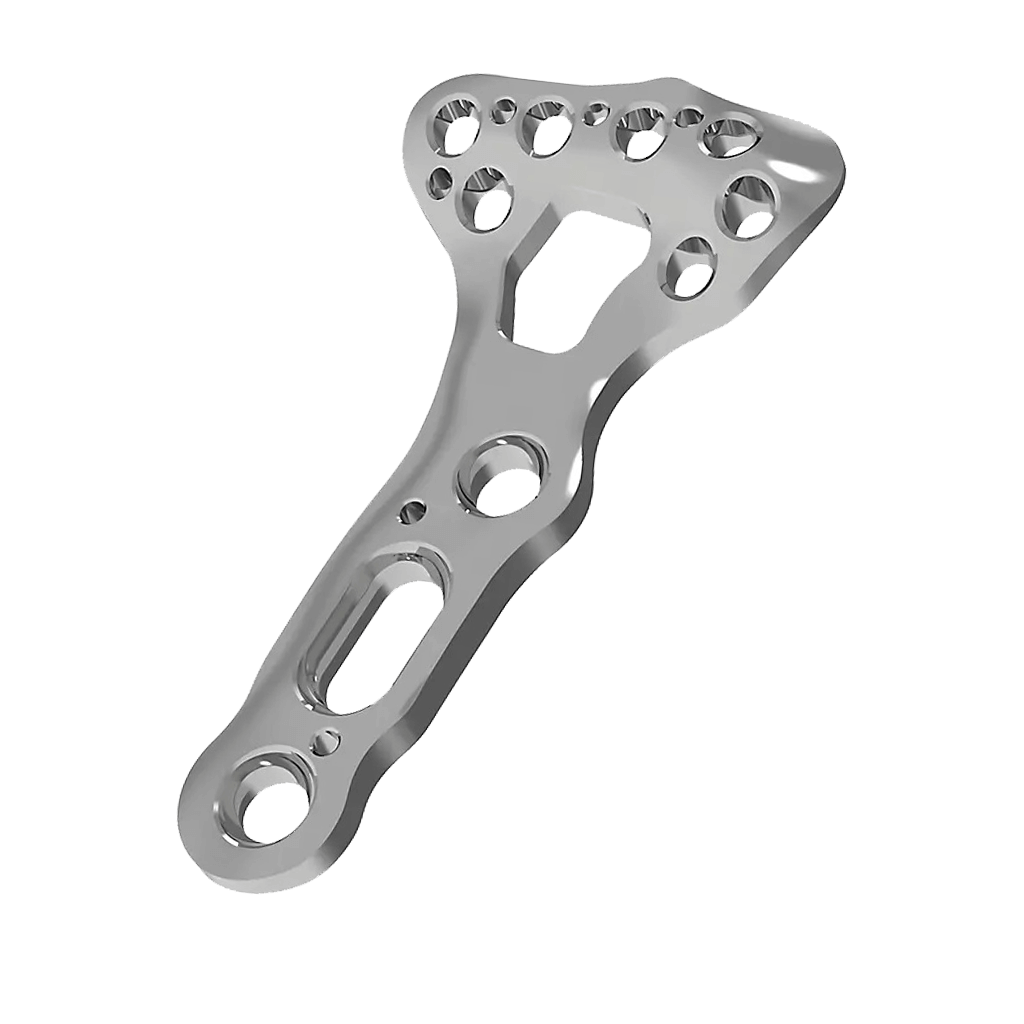
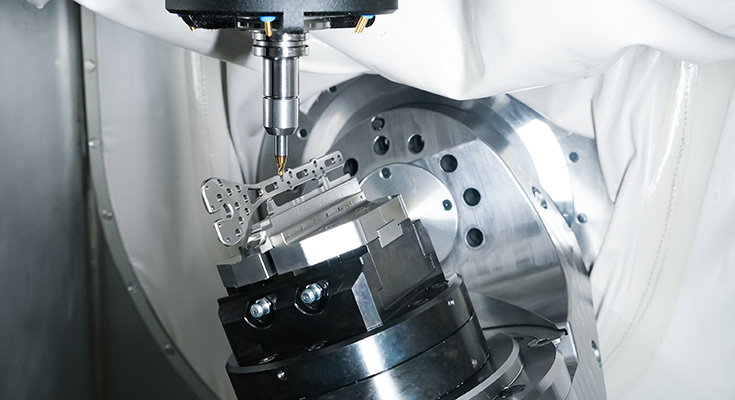
Bone plates present significant manufacturing challenges due to their complex anatomical curvatures and the requirement for high fatigue strength. Machining Ti6Al4V ELI requires stringent thermal control to prevent material galling and ensure the integrity of the locking screw thread geometry. Maintaining co-axiality across multiple screw holes on a contoured surface is critical for surgical assembly.
DEK addresses these challenges using 5-axis simultaneous milling to execute 3D organic shapes in a single setup, reducing cumulative positioning errors. Our process includes specialized deburring and electropolishing to eliminate stress concentrators. Every batch is validated using automated optical inspection and CMM to confirm profile accuracy against the original CAD model.
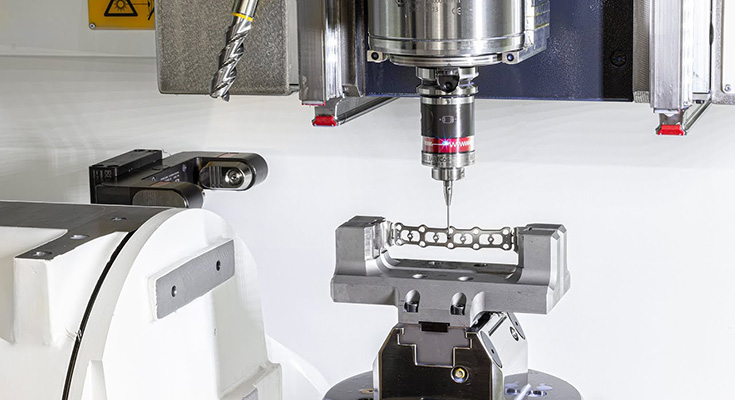
We execute complex 3D helical tool paths to generate twisted anatomical profiles. This eliminates the need for manual grinding, which often compromises dimensional accuracy. Our 5-axis strategy ensures the tool axis is always optimal for the local surface normal, providing superior grain structure integrity.
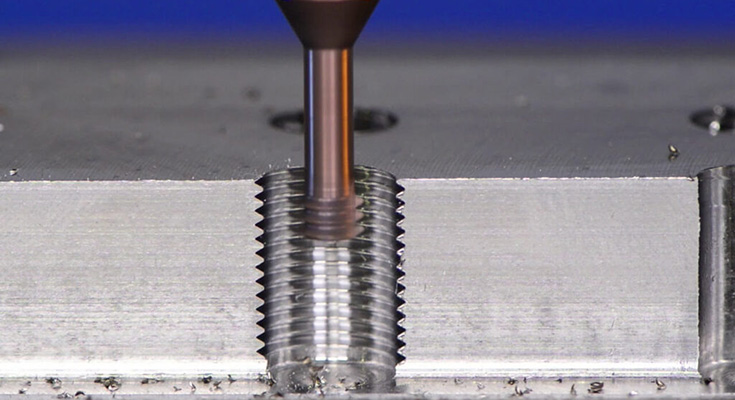
Unlike traditional tapping, our thread milling process maintains the exact pitch diameter even in high-strength Grade 23 Titanium. This is critical for bone plates where the screw must lock at a precise torque without cross-threading or mechanical failure under load.
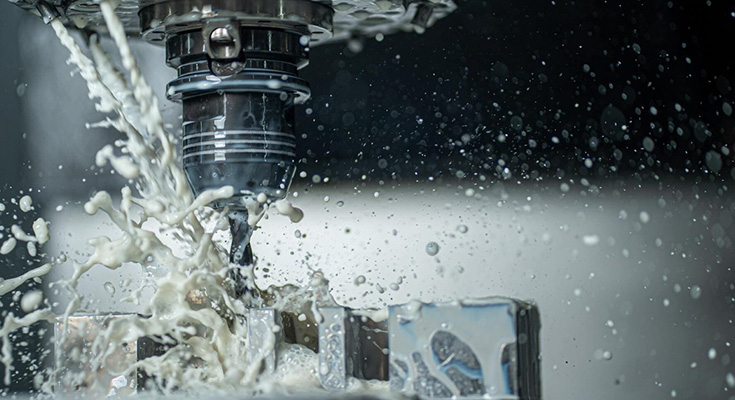
To prevent alpha-case formation and material hardening, we use 70-bar high-pressure coolant delivered through the spindle. This ensures rapid chip evacuation and prevents heat transfer into the bone plate, preserving the material’s mechanical properties and biocompatibility.
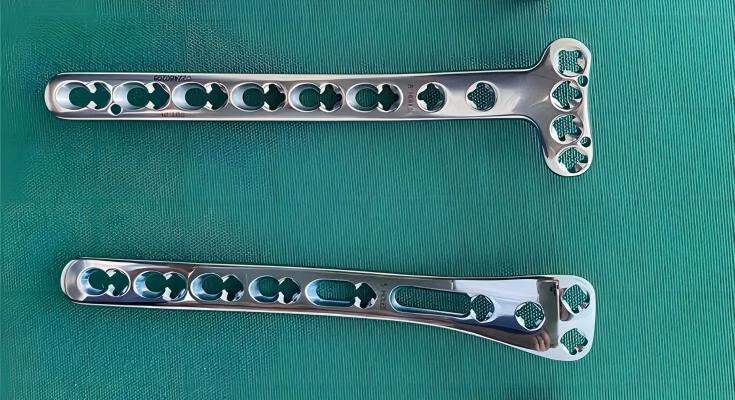
Our finishing line follows ASTM F86 standards to remove metallic ions and create a biocompatible titanium oxide layer. We offer color-coded Type II anodizing, which improves wear resistance and allows for clear size differentiation in the operating room.
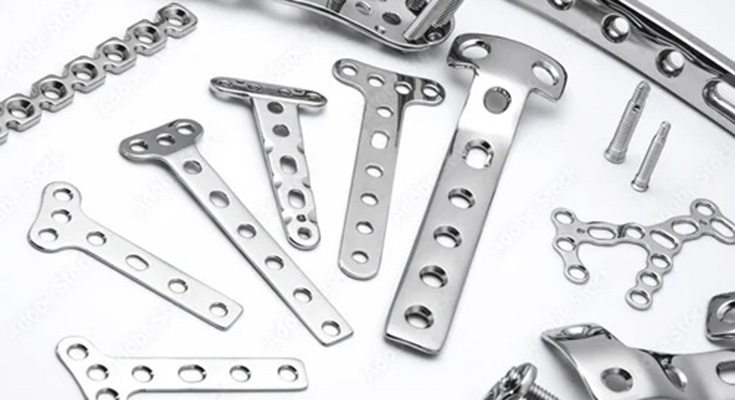
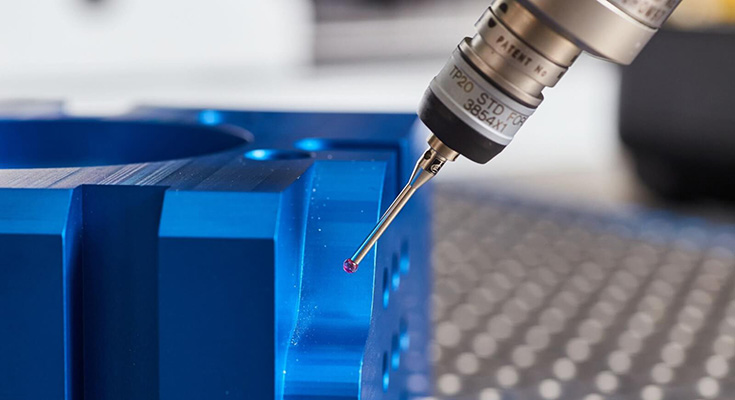
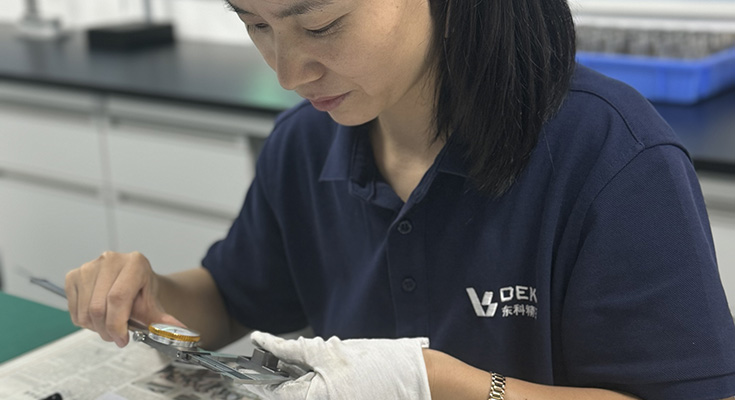
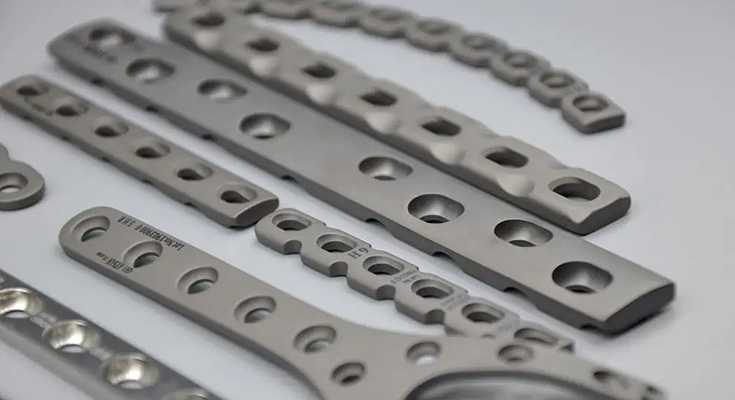







Data-backed precision and redundant quality verification, mechanical engineers partner with DEK when technical compliance and dimensional stability are critical.
Upload your CAD files for a Zero-Cost Technical DFM Review. Our engineers will identify potential dimensional drift risks and verify locking hole co-axiality for 5-axis stability.
