

I have discussed the challenges of being in the manufacturing business many times before with factory owners, engineers, machinists, and production managers. Every time we talk, we all seem to share something in common, and that is that the manufacturing business is hard.
The pressure doesn’t go away. Customers demand more from us, delivery times are shortened, our costs fluctuate, and skilled labor remains difficult to find. There are days when you spend the majority of your time solving quality issues; there are times when it feels like you have to change production plans constantly.
But we stick around. We continue investing in the business, build teams, fine-tune the process of production, and resolve problems. It may seem crazy to others as to why anyone should go through that trouble, but every single person who has worked in manufacturing long enough knows what I’m talking about. That is because the payoffs are definitely worthwhile.
The Daily Realities That Make Manufacturing Hard

There is an increasing demand for quality. Toleranzen could be in microns instead of millimeters when making aircraft hardware, surgical instrument components, or precise mechanical assemblies. Quality is always a prerequisite, with absolutely no room for mistakes. Mistakes would mean delays, re-inspection, and possibly a recall of the products altogether.
Time limits are also very stringent. The manufacturing process should take into account logistics, design changes, orders, and machine maintenance. In addition to all that, the coordination of every phase of the process, from quoting through purchasing, manufacturing, to inspections, will be necessary.
Finding qualified personnel is quite challenging, too. Machinists, programmers, inspectors, or manufacturing engineers are not easy to come by. Losing a valuable team member will also mean losing a wealth of experience along with them.
When it comes to production, financial factors must also be considered. Many people may not be aware that not all industrial techniques generate large profits. Capacity planning should include machine usage while leaving enough room for future development. Even in a recession, there are increased loads and investments in equipment, tools, training, and quality control.
As Maya Angelou once remarked, "Nothing will work unless you do." I see this reality every day in my observations of the industrial industry. Machines provide for automation, whereas software enables efficiency. However, it is ultimately up to the people to turn up, confront issues, and accept responsibility.
The Responsibilities That Few People Understand
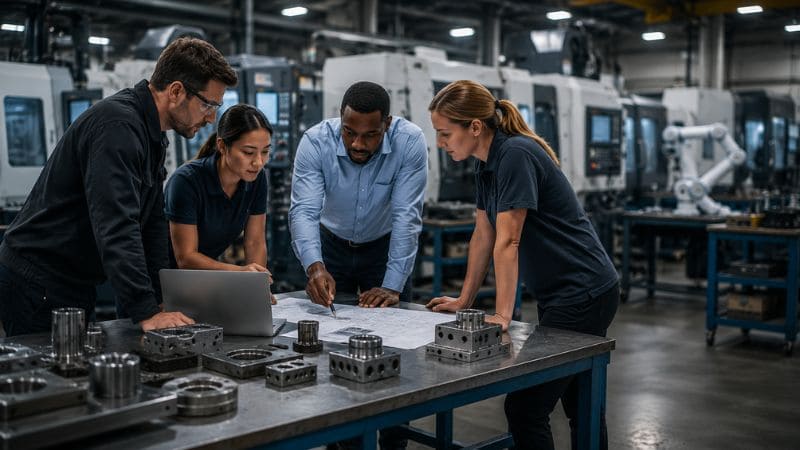
One thing about manufacturing that does not receive due emphasis is the responsibilities that lie on the shoulders of the people who manufacture.
If one piece of equipment goes wrong when put into use, be it an airplane, a surgical tool, or a robotic machine, its repercussions are far beyond just creating a nuisance. This thought always runs in the minds of factory owners/managers while making their decisions.
Being a factory owner or manager means you need to be responsible for things beyond production. Factory employees have families whose livelihoods are dependent on their continued work and stable income. Every order constitutes a partnership with a business that relies on promptness and dependability.
Making one decision leads to the creation of other responsibilities. For instance, buying new equipment means more money out of pocket, which will be recovered at a later date. An increased order means a lot of responsibility, as regards schedule management. Increasing factory capacities implies making certain changes within and outside the factory.
Most people don't even have a clue about these responsibilities. They only see the end result of the process.
The Moments That Make All the Struggle Worth It
Though all this is tough sometimes, there are times when we remember why we've chosen the manufacturing industry.
There is definitely something special about being able to watch one of the components you manufactured being incorporated into a larger picture. Whether it is a component used in an aircraft, a device that saves people's lives, or a robot doing something incredible, there is no feeling like knowing that what you do has meaning. And it brings joy that is incomparable.
When faced with a customer's problem that seems insoluble at first sight, whether the geometry is complicated, tolerances are tight, or the material doesn't want to be machined, it turns out that everything works in the end. Sometimes a project reminds us that manufacturing can be just as challenging as solving problems.
There is immense gratification in seeing individuals grow as well. Someone who starts out as a young tech needing frequent supervision eventually grows into an expert whom everyone looks up to.
And then there are also the repeat customers. Not because of low prices, but from the establishment of trust. There is something more important than money in the manufacturing industry.
What Manufacturing Gives That Other Industries Don’t
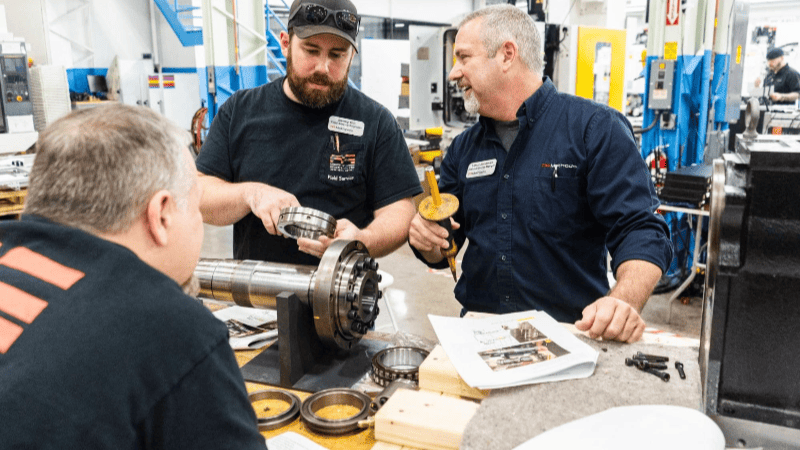
Manufacturing gives you a sense of purpose that’s becoming harder to find these days.
By the end of the day, you’ve actually made something real. Ideas turn into prototypes, prototypes turn into products, and those products become solutions people rely on every day. There’s a clear link between the work you put in and the results you see.
One should never underestimate the importance of continual learning in order to properly do one's job; thus, this makes this industry interesting when compared to other businesses.
Manufacturing communities are each unique in their own way. Success is ultimately determined by the collaboration of people from various backgrounds. Engineers, machinists, inspectors, purchasers, operators, programmers, and managers must all be on the same page, working toward a common goal. Facing obstacles together often results in strong professional bonds and a profound sense of mutual respect.
The most significant takeaway from manufacturing is that skills are vital. When you prioritize precision, you receive better results. Process improvement ensures quality, and sound decision-making leads to improved outcomes. The link between hard work and success is pretty straightforward.
My Own Reasons for Staying in This Industry
Some people wonder why I keep expending so much effort on manufacturing.
One explanation can be stated plainly: Problem-solving brings me a lot of satisfaction. It gives one great pleasure to convert ambiguity into clarity. Getting from complicated sketches to a reproducible manufacturing process involves not only skill but discipline.
There is a thrill associated with working in innovative sectors. Technologies in robotics, unmanned aircraft, advanced medicine, and automation will shape the future. Manufacturing is the industry in which innovations can enter the real world.
Unter DEK, I have been fortunate enough to see how skilled teams tackle tasks that were once considered impossible. Complicated material, stringent tolerances, accelerated deadlines, and unusual design features have frequently led to learning experiences.
Best of all, there is satisfaction in being able to assist customers in realizing their innovations. Whether it means creating equipment, developing medicine, or introducing automation technology, we get our piece of glory in their success.
The Future Worth Fighting For
I am still confident about the future of manufacturing.
The new generations are starting to find joy in creating tangible goods and developing solutions for real-world problems. Many young professionals understand that there are few other professions in which one gets to combine technological and creative aspects, as well as engineering know-how and concrete success.
AI and automation will transform the field, too, but not as some people fear. It seems that the biggest potential for the development will emerge from automation of monotonous administrative tasks, increased visibility in production processes, robust quality management, and better use of qualified personnel to make informed decisions.
One of the most relevant quotes when it comes to manufacturing is by Alan Kay, who stated that “the best way to predict the future is to invent it.” We cannot sit back and watch things change in the technological industry; we are a part of it. Every precision-engineered component, production breakthrough, and technical solution we develop will have a say in what tomorrow's products look like.
To create a smarter plant of tomorrow, more automation isn’t enough; it needs to be smarter, more connected, and ultimately more satisfying for the workforce. With repetitive operations becoming more efficient, what’s left is to capitalize on people’s creativity, ingenuity, and expertise, making manufacturing an exciting place to work.
To those who value change, are brave enough to take risks, and maintain the discipline and precision the manufacturing industry relies upon, the future of manufacturing is worth creating and worth the battle.
Schlussfolgerung
Manufacturing was never meant to be an easy field. It requires resilience, patience, accountability, and a thirst for knowledge. The pressure can be intense; anyone who has ever worked in a plant knows that there is no guarantee of success.
For most of us, however, the positives outweigh any difficulties we face. We remain in this field because we like working on challenging problems. We remain here because we feel that craftsmanship has not lost its value. We remain here because we derive pleasure from building products that add value to people’s lives.
Maybe that’s exactly why we keep pushing for this industry. Every finished piece reflects human skill, determination, and the belief that putting in the effort to create something meaningful is always worth it. As manufacturing advances, it’ll bring new technologies, fresh challenges, and exciting opportunities, but the pride that comes from making something real will remain the same.
