
The Crucial Role of CNC Machining in Advanced Thermal Management
When designing high-power electronic systems—such as AI server clusters, EV traction inverters, and aerospace avionics—engineers heavily prioritize selecting materials with superior thermal conductivity, like copper or advanced aluminum alloys. However, raw material properties only represent theoretical cooling capacity.
A critical factor frequently overlooked in the early design phases is manufacturing precision. Even the most highly conductive alloy will fail to reach its thermal potential without CNC-Präzisionsbearbeitung. In modern thermal management, strict dimensional tolerances and surface finishes are just as critical as the material itself in bridging the gap between CFD (Computational Fluid Dynamics) simulations and real-world hardware performance.
Minimizing Contact Thermal Resistance via Surface Flatness
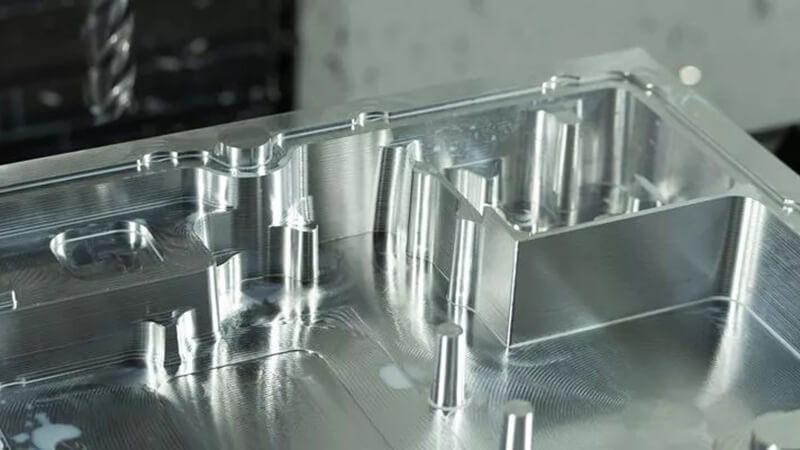
The primary bottleneck in any cooling assembly occurs at the physical interface between the heat source (e.g., an IGBT module or CPU) and the cooling base. If the metal surface lacks perfect flatness, microscopic air gaps will form. Since air is an exceptional thermal insulator, these gaps drastically increase interfacial thermal resistance.
While Thermal Interface Materials (TIMs) like thermal grease or phase-change pads are used to displace this air, they inherently possess much lower thermal conductivity than the metal itself. Therefore, the engineering objective is to minimize the Bond Line Thickness (BLT) of the TIM.
Precision CNC machining addresses this directly. Utilizing advanced face milling and fly cutting techniques, manufacturers can achieve exceptional surface flatness and extremely low surface roughness (Ra). A mirror-like, ultra-flat contact surface allows for a substantially thinner layer of TIM, ensuring uniform pressure distribution and maximizing heat transfer efficiency. For high-power density electronics, this micro-level machining precision directly translates to a lower operating junction temperature.
Overcoming Geometric Constraints in Compact Spaces
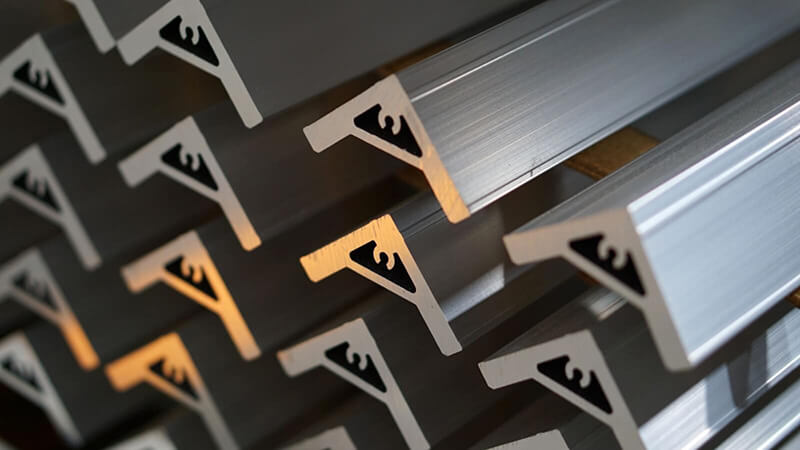
As power densities escalate, thermal components must dissipate massive heat loads within strictly confined envelopes. This necessitates optimized surface areas featuring thin fins, high fin density, and complex aspect ratios.
Traditional high-volume processes like die casting or standard aluminum extrusion face severe geometric limitations. Extrusions are restricted by die constraints, often failing to produce ultra-thin fins or variable fin pitches, while castings can introduce internal porosity that disrupts thermal conductivity.
Multi-axis CNC machining circumvents these limits, allowing manufacturers to sculpt complex heat sink structures directly from solid billet materials. This process provides absolute control over fin thickness, pitch, and base plate uniformity, eliminating the risk of fin deformation. Because of this architectural freedom, thermal management specialists such as Ecotherm rely heavily on precision machining processes when developing custom heat sinks for high-power industrial equipment, power modules, and computing nodes.
Precision Fluid Dynamics in Liquid Cold Plates
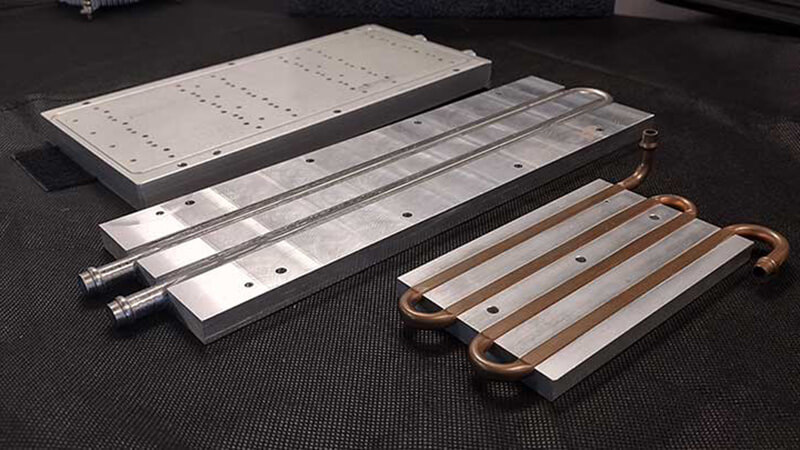
When heat fluxes surpass the physical limits of forced air convection, industries pivot to liquid cooling. Within these systems, the role of CNC machining becomes even more indispensable.
For high-performance vacuum brazed liquid cold plates, the internal micro-channels are meticulously machined into the base plates prior to the joining process. The geometric accuracy of these channels—specifically their depth, width, and turning radii—dictates the entire fluid dynamic profile of the cooling loop.
Imprecise machining can lead to uneven coolant flow distribution, resulting in localized hot spots and an unacceptable pressure drop (Delta P) across the system. Furthermore, precision CNC milling ensures that the upper and lower plates mate perfectly before the vacuum brazing process. This flawless fitment is non-negotiable for guaranteeing the structural integrity, burst pressure resistance, and absolute leak-proof sealing required in mission-critical liquid cooling applications.
Conclusion: Bridging CFD Simulation and Physical Reality
A sophisticated thermal design holds little value if it cannot be accurately replicated on the factory floor. Minor manufacturing deviations—from warped base plates to rough internal channels—can easily compromise a system's thermal performance and reliability.
Precision CNC machining serves as the critical bridge between theoretical thermal engineering and physical reliability. By ensuring flawless contact surfaces and executing intricate cooling geometries, advanced machining defines the performance boundaries of modern heat sinks and cold plates. For hardware engineers tackling extreme thermal challenges, collaborating with a manufacturing partner equipped with elite CNC capabilities is the ultimate prerequisite for product success.
