From Prototype to Batch Production: Streamlining the CNC Post-Processing and Marking Pipeline
For many manufacturers, CNC machining is only the beginning of production. After a part comes off the machine, it must move through deburring, cleaning, finishing, identification, inspection, packaging, and documentation before it can ship. In prototype work, those steps are manageable by hand, but once output scales into batch production, the post-processing side of the workflow can become the primary efficiency constraint.
That is why laser marking has shifted from being a simple finishing step to becoming a core component of the production pipeline itself. In industrial applications, laser marking is used to create permanent identifiers directly on parts, which improves readability and supports traceability in connected manufacturing environments.
How Laser Engraving Supports CNC Post-Processing
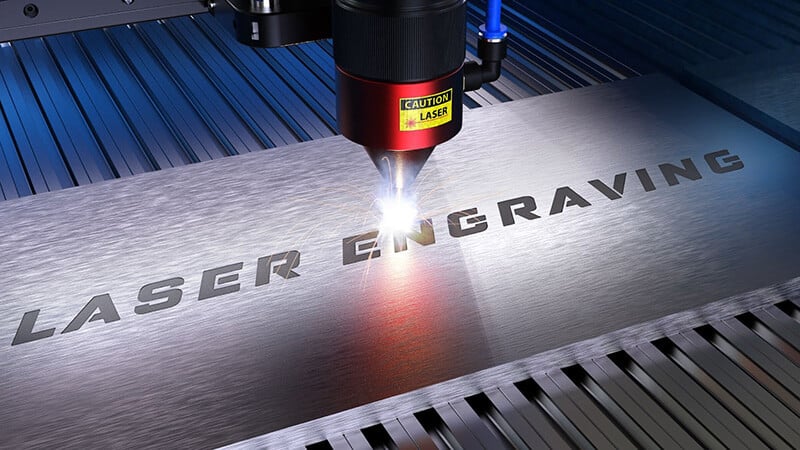
The difference between a prototype shop and a batch-production line is about volume, repeatability, and control. A small production run can rely on manual labeling, handwritten records, and operator-by-operator handling. However, once production scales to hundreds or thousands of identical parts, any inconsistency in identification, inspection, or documentation quickly becomes costly.
A physical label can be misplaced or damaged. Inks can fade under harsh industrial solvents. Manual records might drift from the actual component. A laser mark changes the nature of the workflow itself. Laser engraving systems can mark serial numbers, QR codes, and Data Matrix codes on metal in seconds with high contrast, durability, and repeatability.
Meanwhile, as laser marking is a non-contact process and requires no consumables, it can be integrated immediately after machining or ultrasonic cleaning. It streamlines the manufacturing pipeline by reducing processing steps and reducing manual material handling complexity without introducing additional tool wear.
Why Fiber and UV Lasers Play Different Roles in CNC Production
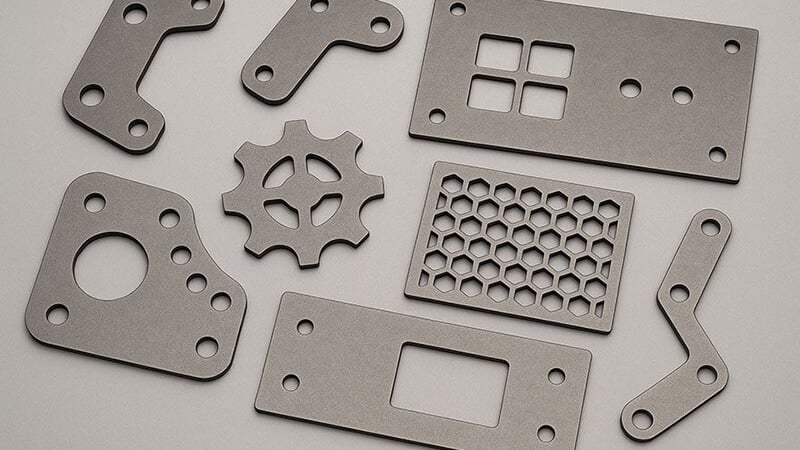
When selecting a laser marking system for CNC post-processing, material compatibility and production requirements are the primary factors that determine the appropriate technology. Fiber and UV laser systems are typically used for different but complementary applications, depending on whether the priority is high-speed marking on metals or high-precision processing and material versatility.
Fiber laser systems and CNC-machined metal components
Für CNC-machined metal components, fiber laser systems are the most widely adopted solution. They are specifically optimized for high-speed marking on metals such as stainless steel, aluminum, titanium, brass, and tool steel.
Their ability to generate durable, high-contrast marks without consumables or tool wear makes them particularly effective for industrial traceability and long-term part identification. Meanwhile, fiber lasers are also used for other metal-focused applications, where thermal interaction with the material can be controlled to achieve deep scribing, color engraving, annealing, or surface contrast effects. While they can be applied to certain plastics in specific cases, their strongest performance remains in metal marking, especially for CNC-produced components where durability and speed are key requirements.
UV laser systems and CNC-machined components
UV laser systems are designed for high-precision, low-thermal-impact applications. Operating at a 355nm wavelength, UV lasers interact with materials in a fundamentally different way, enabling "cold marking" that minimizes heat stress on the surface.
In many CNC production environments, UV lasers are often used when marking requires ultra-fine geometries, micro-scale text on metal, or highly sensitive materials such as polymers and specialized coatings that cannot tolerate thermal deformation.
From Prototype Thinking to Production Thinking
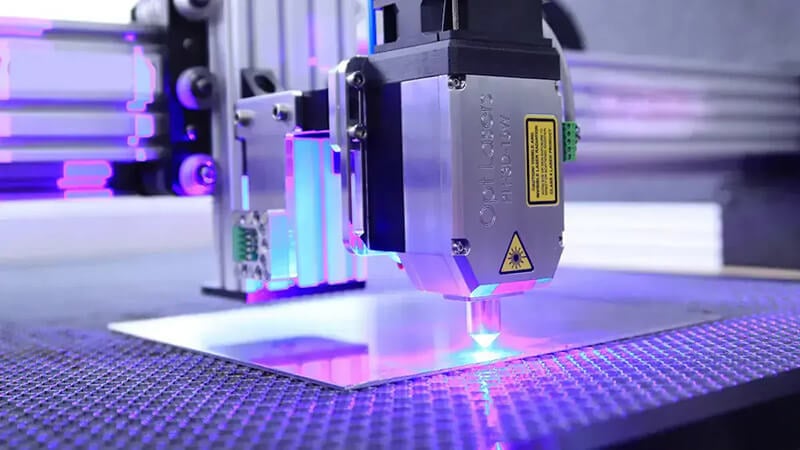
Prototype production often emphasizes structural flexibility. In contrast, batch production prioritizes absolute repeatability. The post-processing and marking pipeline must reflect this shift. Once a product moves from a one-off sample to an ongoing production program, the marking method must support consistent cycle times, automated data handling, permanent readability, and seamless integration with inspection systems.
This transition explains why advanced manufacturers integrate laser systems directly within the machining ecosystem. When parts move from prototype validation to scale, utilizing a reliable hardware specialist ensures that both the physical tolerances and the downstream marking workflows are optimized for fast, consistent, and permanent identification.
Final Thoughts: CNC and Laser Marking as a Unified Manufacturing Workflow
As manufacturing moves from prototype development to batch production, efficiency depends on how well each stage of the workflow is integrated into a single, continuous process.
CNC machining specializes in rapidly producing precise mechanical geometry, while laser marking enables fast, high-resolution, and permanent part identification. Rather than operating as separate steps, these two technologies form a complementary system: CNC builds the part, and laser marking assigns its identity.
As traceability and automation requirements continue to increase across industries, integrating laser marking directly into CNC production workflows helps manufacturers improve consistency, reduce manual handling, and scale production more efficiently. Utilizing specific configurations from a specialized ComMarker laser engraver setup allows modern facilities to bridge the gap between machining and traceability, enabling a smoother transition from prototype production to high-volume manufacturing.