
Density of Steel: Detailed Guide
You need to know the density of steel when you’re working on designs, building parts, or choosing materials. It helps you figure out how heavy something will be before you make it.
In this guide, you’ll learn what steel is, what the density of steel is, and how to calculate it. You’ll also see what can change the density and how it affects your work.
What is Steel?
Steel is a metal made mostly of iron with a little carbon added. Sometimes, other elements like chromium, nickel, or manganese are added to make it stronger or more resistant to rust. You see steel in buildings, tools, cars, and machines.
What is the Density of Steel?
Density tells you how much mass is packed into a certain amount of space. It’s a way to compare how “heavy” or “light” different materials are for their size.
Steel usually has a density of about 7,850 kg/m³ (or 0.284 lb/in³). This can change based on the type of steel and the alloy composition.
Why is Density Important for Steel?

Density is important in physics, engineering, and material science because it helps you understand how materials will react to things like pressure and temperature.
Here are the main reasons in detail:
Weight Calculations
You need to know the density of steel to calculate its weight accurately. Knowing the exact weight helps make sure buildings or structures are safe and strong enough to hold the loads they are designed for.
Auswahl des Materials
The density of steel also affects which materials you choose for different projects. For example, in airplanes where weight matters, lighter materials like Aluminium might be better than steel. But for things that need to be very strong and durable, like construction equipment, steel’s higher density is a big advantage.
Cost Estimation
When planning a project, knowing the density of steel helps you estimate costs. Heavier steel costs more to transport and is often priced by weight. Understanding its density helps you figure out the total cost of materials needed.
Qualitätskontrolle
In manufacturing, the density of steel can tell you about its quality. If the density changes, it could mean there are impurities or differences in the steel mixture. Keeping the density consistent helps ensure the steel is strong, durable, and free of defects.
How to Calculate Density of Steel?
To find the density of steel, you need its mass and volume. First, measure the mass with a scale. Next, find the volume by measuring its size. If it’s a rectangle, multiply the length, width, and height.
Use the formula:
Density = Mass ÷ Volume
Factors that Affect Steel Density

Below are the things that may affect the density of steel:
Zusammensetzung der Legierung
As mentioned earlier, the metals added to steel can change its density. For example, adding Chrom and nickel to make stainless steel makes it slightly denser than regular carbon steel.
Verarbeitungsmethoden
How the steel is made also affects its density. Cold-rolled steel is usually denser than hot-rolled steel because it has fewer air pockets and a tighter grain structure.
Impurities and Microstructure
If there are impurities or changes in the steel’s structure, it can affect its density. Cleaner and more uniform steel usually has a more consistent density.
Density of Different Types of Steel Alloys
Here are some common types of steel and their typical densities:
| Steel Alloy Type | Dichte (kg/m³) | Dichte (lb/in³) |
| Low Carbon Steel | 7,850 | 0.284 |
| Medium Carbon Steel | 7,850 | 0.284 |
| High Carbon Steel | 7,860 | 0.284 |
| Austenitic (e.g., 304, 316) | 7,900 – 8,000 | 0.285 – 0.289 |
| Ferritic (e.g., 430) | 7,700 – 7,800 | 0.278 – 0.282 |
| Martensitic (e.g., 410, 420) | 7,750 – 7,800 | 0.280 – 0.282 |
| Duplex-Edelstahl | 7,800 | 0.282 |
| Hochgeschwindigkeitsstahl | 8,000 – 8,200 | 0.289 – 0.296 |
| Cold-Work Tool Steel | 7,700 – 8,000 | 0.278 – 0.289 |
| Niedrig legierter Stahl | 7,800 – 7,900 | 0.282 – 0.285 |
| Hochlegierter Stahl | 7,850 – 8,000 | 0.284 – 0.289 |
| Spring Steel | 7,850 – 7,860 | 0.284 |
Applications of Steel
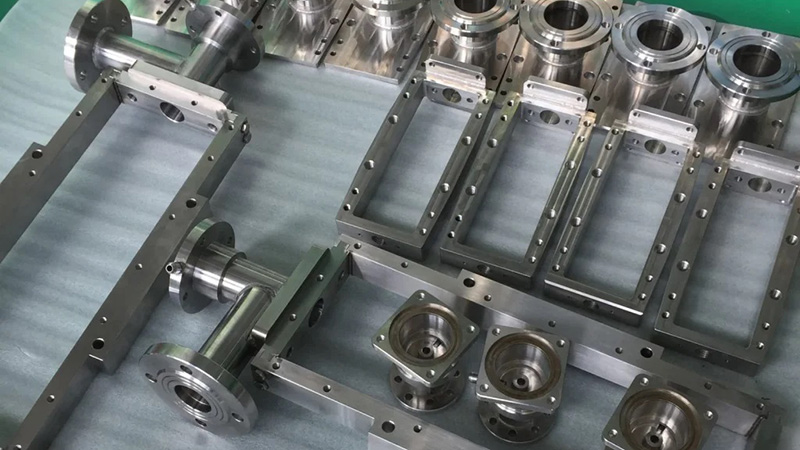
The density of steel affects how you can use it in different industries, such as the following:
Bauwesen
When building structures like buildings or bridges, you rely on steel because it’s strong, durable, and versatile. As mentioned above, by knowing its density, you can make sure your projects are safe and stable.
Autoindustrie
If you’re working in car manufacturing, choosing steel with the right density helps you build lighter, stronger, and more fuel-efficient vehicles. This also keeps costs down while meeting safety standards.
Luft- und Raumfahrtindustrie
If you’re designing aircraft, the weight of every material matters. Using steel with the right density allows you to build strong, lightweight components for wings, landing gear, and engines.
Maritime Industry
When building ships, you need steel that resists rust and stays strong in tough conditions. By measuring its density, you can ensure your vessels are stable and seaworthy.
Herstellung
If you’re involved in manufacturing, understanding the density of steel helps you with processes like casting, forging, and welding. This lets you create parts that are accurate, strong, and high-quality.
Schlussfolgerung
The density of steel depends on the type of alloy and its composition. Knowing the density of steel helps you make accurate weight calculations, choose the right materials, estimate costs, and ensure good quality in engineering and industrial projects.
At DEK, we provide quality machined steel parts you can trust. Send us your design, and we’ll provide a quick, no-obligation quote. Let’s make your project a success.
FAQs
How carbon affects steel density?
Adding carbon to steel slightly increases its density. Carbon atoms fill small spaces in the iron structure, making the steel a bit denser. However, since carbon usually makes up less than 2% of steel, the change in density is small. More carbon also makes steel harder and stronger, but less flexible.
What is the density of steel in kg?
The typical density of steel is about 7,850 kilograms per cubic meter (kg/m³). This can vary slightly depending on the type of steel.
What is the specific density of steel?
Specific density, or specific gravity, compares a material’s density to that of water. Since water has a density of 1 g/cm³, and steel is about 7.85 g/cm³, steel’s specific gravity is 7.85
What is the density of steel lb in³?
Steel’s density is approximately 0.284 pounds per cubic inch (lb/in³). This is a common value used in engineering and construction.
